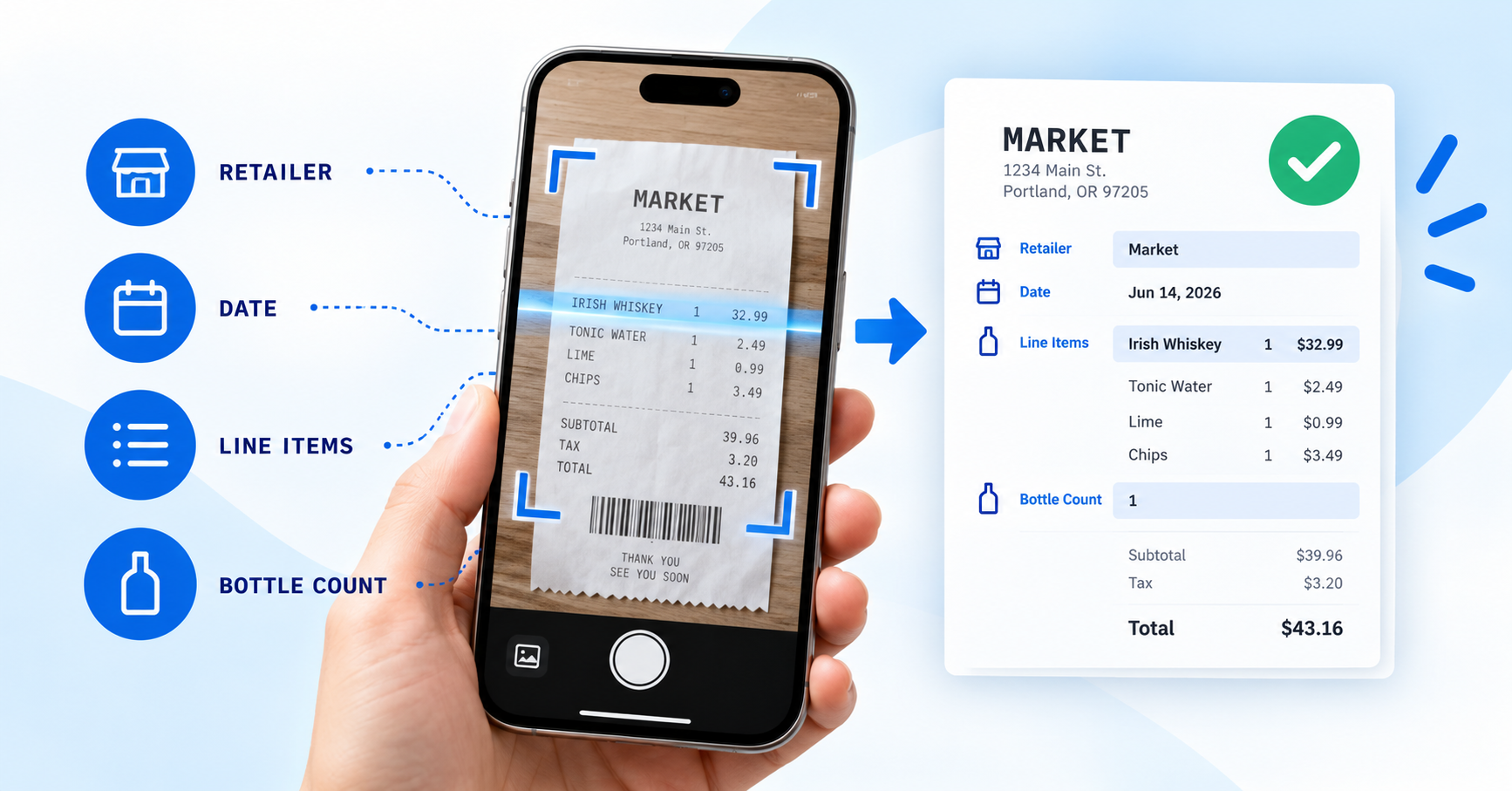
Receipt validation is the process of reading a photograph of a retail receipt and confirming that a specific product was actually purchased, at a specific store, on a specific date. It is the mechanism that lets a brand pay a rebate to a real buyer rather than to anyone who fills in a form.
The shopper photographs the receipt and uploads it. Validation reads four things off the image: the retailer, the transaction date, the line items, and the count of qualifying products in the basket. Those four fields are what turn an image into a record a brand can act on.
Duplicate and edit detection run alongside. The same receipt submitted twice is caught. So is a receipt that has been altered, cropped to hide a date, or photographed from a screen rather than paper. This matters more than it sounds. A rebate program without duplicate detection is a program that pays the same purchase repeatedly.
What validation gives a brand that scan data does not is speed and identity. Scan data arrives weeks after the purchase, aggregated by chain, stripped of any trace of the person who bought the bottle. A validated receipt arrives the same day and carries a named, permissioned contact attached to a verified purchase. One tells you what happened. The other tells you who did it, while there is still time to do something about it.
The trade-off is coverage. Scan data captures every transaction in a participating retailer. Receipt validation only captures the shoppers who chose to submit. That is a real limitation and it is worth stating plainly: validated receipts are a sample, not a census. What makes the sample useful is that every record in it is a confirmed purchase by a contactable person, which is not true of any panel or projection.
Validation can be fully automated, fully manual, or a combination. Automated reading handles volume and gets a submission to a decision in seconds. Manual review catches the edge cases automation is bad at: faded thermal paper, handwritten receipts from independent retailers, bundled promotions where the qualifying product is buried in a line item.
The practical question for a brand is not which method is better but what the failure modes cost. An automated program that approves a bad receipt pays out money it should not have. A manual program that takes four days to approve a good one loses the shopper's attention and the goodwill the rebate was meant to buy. Most programs that work well run automation first and route the ambiguous cases to a human.