Jan 2025 to Jan 2026
Northeast corridor
Multi-brand portfolio rebate
Wine Portfolio Client
How a wine portfolio ran a single cash-back offer across three brands and moved 20,063 bottles on 5,377 validated receipts.

One offer, three brands, 20,000 bottles

INSIGHTS
Case study
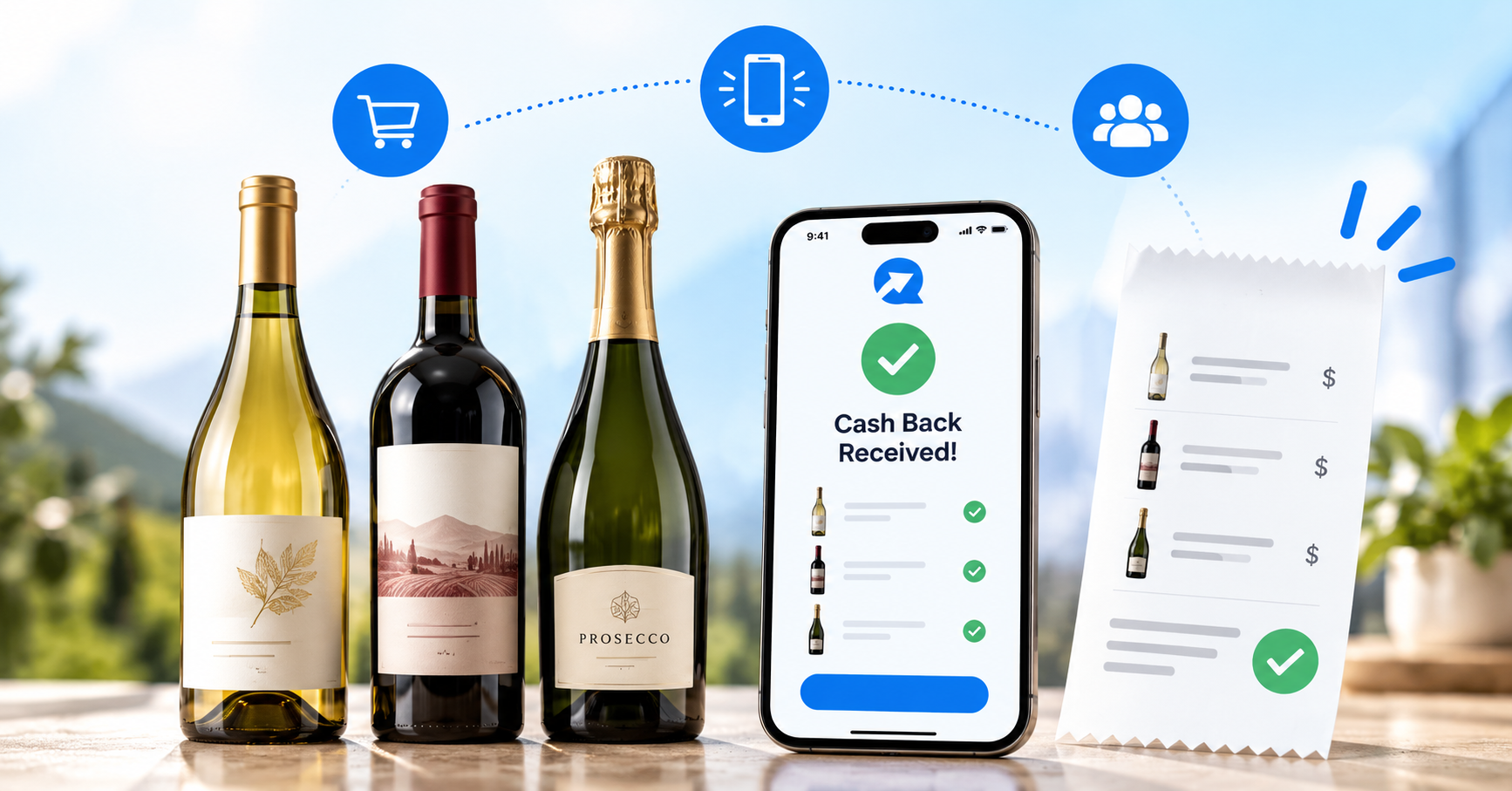
Three wine bottles, value, sweet red and prosecco, each linked to its own checked line on a single receipt.
A wine portfolio rarely has one customer. It has several, and they do not shop the same way. The importer in this campaign carried three brands that looked adjacent on paper and behaved nothing alike at shelf. One was a high-volume value play. One was a sweet red with a younger following. One was a prosecco bought for occasions. Running three separate promotions would have meant three budgets, three sets of point-of-sale material, three measurement exercises, and three chances for a retailer to decline the whole thing. Running one generic portfolio offer risked the opposite problem: a promotion so broad it spoke to nobody. The question was whether a single offer could carry three different purchase occasions without diluting any of them, and whether the data coming back would be granular enough to tell the three apart afterwards.

Three brands, three shoppers, one budget

One offer, sized to the basket

The campaign ran as a single cash-back offer covering every qualifying product across all three brands. The rebate scaled with the number of bottles on the receipt rather than paying a flat amount per bottle, which let one structure serve a shopper buying a single prosecco and a shopper filling a rack.

One offer, every brand

A single set of point-of-sale material covered the full portfolio. One code, one landing page, one set of terms, regardless of which brand the shopper picked up.

Shopper texts in

One text starts the flow and captures the mobile number at the same moment. The reply carries the offer terms and the upload link.

Receipt upload

The shopper photographs the receipt. Validation reads the retailer, date, line items and bottle count, identifies which brands qualified, and flags duplicates automatically.

Tier applied

Payout scales with the number of qualifying bottles on the receipt, so a shopper buying for a dinner earns visibly more than a shopper buying a single bottle.

Cash back, same window

Funds land by digital payout, usually within 24 to 48 hours. Speed is what turns a rebate from an obligation into a reason to tell a friend.

Three brands, separated in the data

Because validation reads line items rather than just totals, every receipt resolves to a specific brand. One campaign produced three distinct sets of performance data.

04
03
02
05
06
01
Every figure below is tied to a validated retail receipt, not a projection or a panel estimate.
Wine Portfolio Client
Receipts processed
5,377
Consumer payouts
$40,304
Average receipt value
$89 to $104
SMS opt-in rate
56% to 63%
Bottles redeemed
20,063
Bottles per receipt
7.6
One offer did the work of three. We did not have to choose which brand got the budget, and we still came out the other side able to tell them apart.
Planning + Activation team
Wine Portfolio Client

Wine baskets are not spirits baskets

At 7.6 bottles per receipt, the wine shopper is stocking a rack rather than replacing a bottle. An offer built for a single-unit purchase leaves most of the basket unrewarded.

One offer can carry a portfolio

Three brands with different buyers shared a single set of point-of-sale material and a single set of terms. The tier structure did the work of segmenting, not the creative.

Line-item validation is what separates the brands

Reading the receipt at line-item level meant one campaign produced three distinct performance pictures, including format preference and audience age, without three separate promotions.

Running several brands through one offer?

Tell us the brand, the window and the retail footprint. We'll show you what a campaign would look like.

More from Insights

    7327 SW Barnes Rd #120
    Portland, OR 97225
    info@textrebates.com