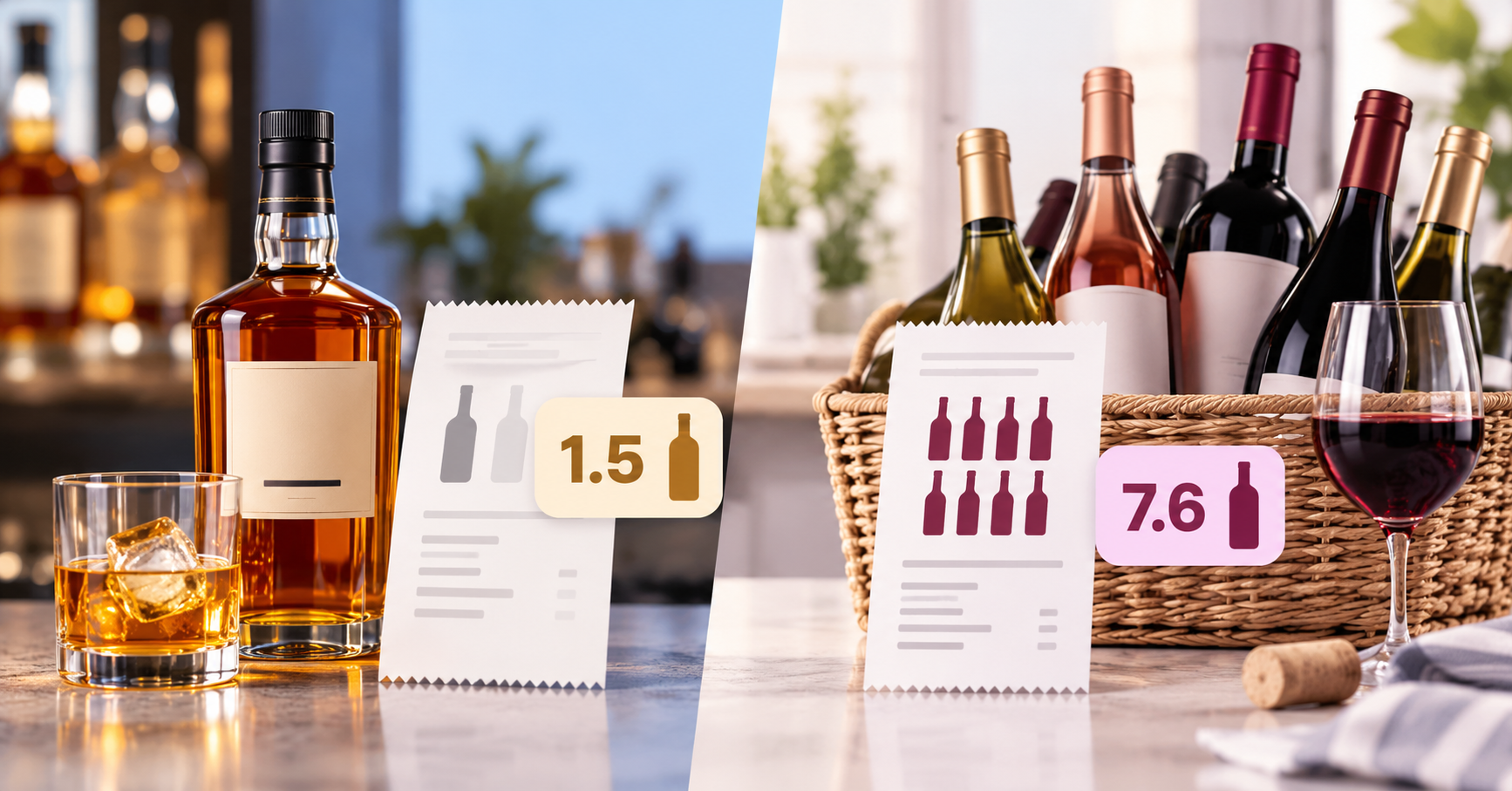
A rebate basket isn't the same size in every category. Obvious, until you have to budget for one.
Across spirits campaigns on the platform, the average paid receipt carries about 1.5 qualifying bottles. One national spirits brand running a tiered cash-back offer across five states landed at 1.5 over 1,183 processed receipts, and a separate Irish whiskey campaign came in a little lower, at 1.3 (1,289 bottles on 991 approved receipts).
Wine is another story. On a three-brand wine portfolio campaign, 5,377 processed receipts carried 20,063 qualifying bottles, about 3.7 per receipt. Same platform, same mechanic, same validation. What changed is the purchase occasion.
A bottle of whiskey lasts, so people buy it one at a time. They're replacing something specific or trying something new, and picking up a second bottle is a decision they have to make. Wine gets bought by the armful: stocking a rack, shopping for a dinner, taking the case discount the retailer already runs. The multi-bottle basket is where wine starts, not where you have to move it.
That's the useful part, because it tells you which structure is doing the work.
In spirits, a flat rebate is the entry point. It's simple to explain, it clears the way for a shopper who has never submitted a receipt before, and it drives trial on a brand that needs volume through the door. Put a tier on top of it when the goal is the second bottle, since that's the purchase the shopper has to be talked into, and it's where the margin math starts to work.
In wine, the second bottle is already in the cart, so a flat per-bottle rebate rides a basket you've already got and keeps entry as simple as it gets. When the goal is growth rather than volume, aim the incentive at something the basket isn't already doing: buying more often, or trading up to the better label on the same shelf.
The budget math comes straight from the basket. If you're modeling payout exposure in spirits, multiply expected receipts by roughly 1.5. In wine, use something closer to 3.7, about two and a half times the exposure on the same receipt count. Carry the spirits multiplier into a wine program and the budget runs short, usually right when redemption is going well.
You won't see any of this in depletion data. Shipments tell you what moved to the retailer. A receipt tells you how many bottles one person put in one basket on one trip, and that's the number that decides what a rebate program costs and what it earns back.